Ten Year Anniversary: Mass Student Sit-Ins Against Modern Segregation of Undocumented Students at Georgia Public Universities
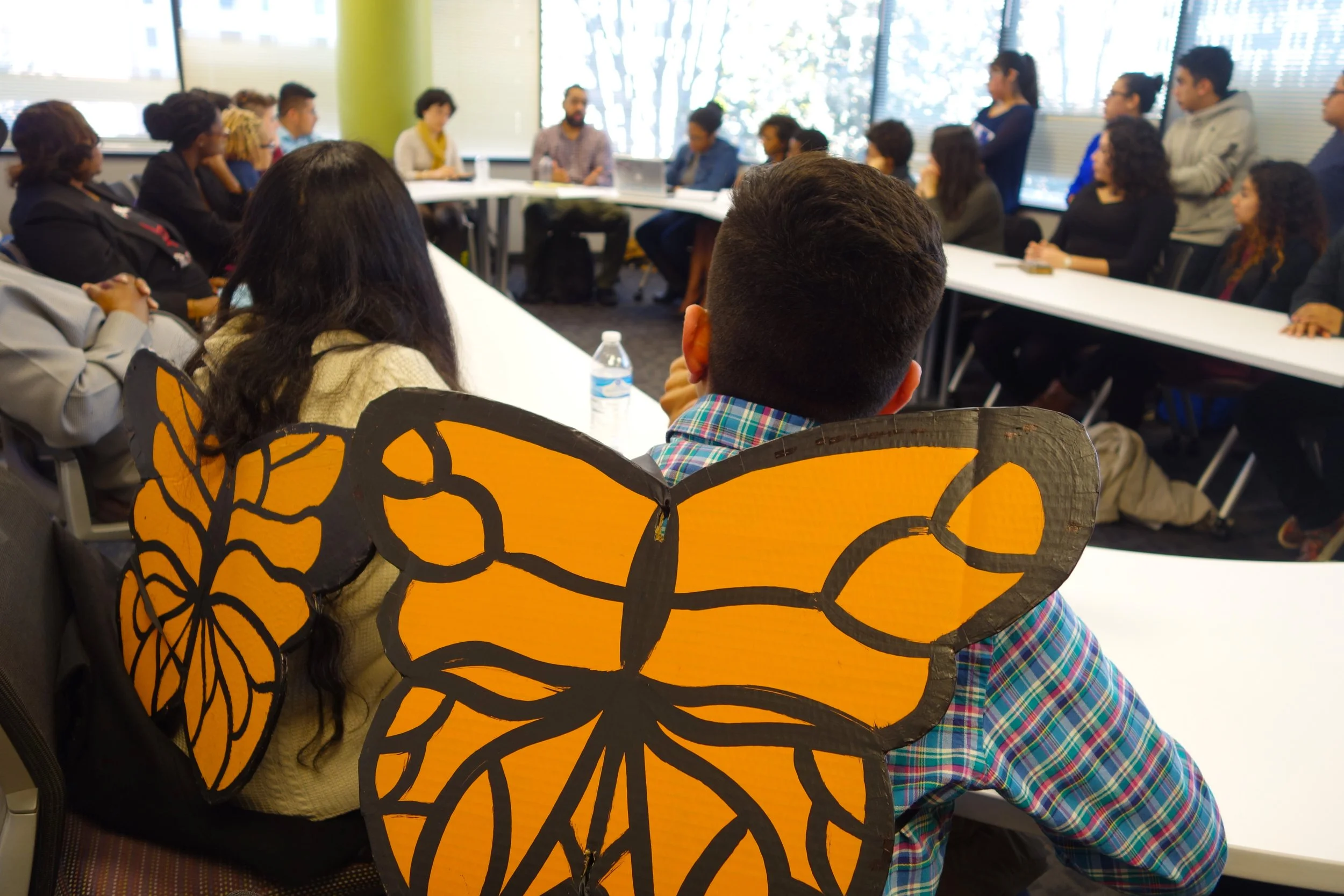
Freedom University holds a classroom sit-in at Georgia State University in protest of their segregation of undocumented students under Board of Regents Policy 4.1.6. Three sit-ins were held simultaneously at Georgia State University, the University of Georgia, and Georgia Institute of Technology.
Photo: Laura Emiko Soltis/Freedom University
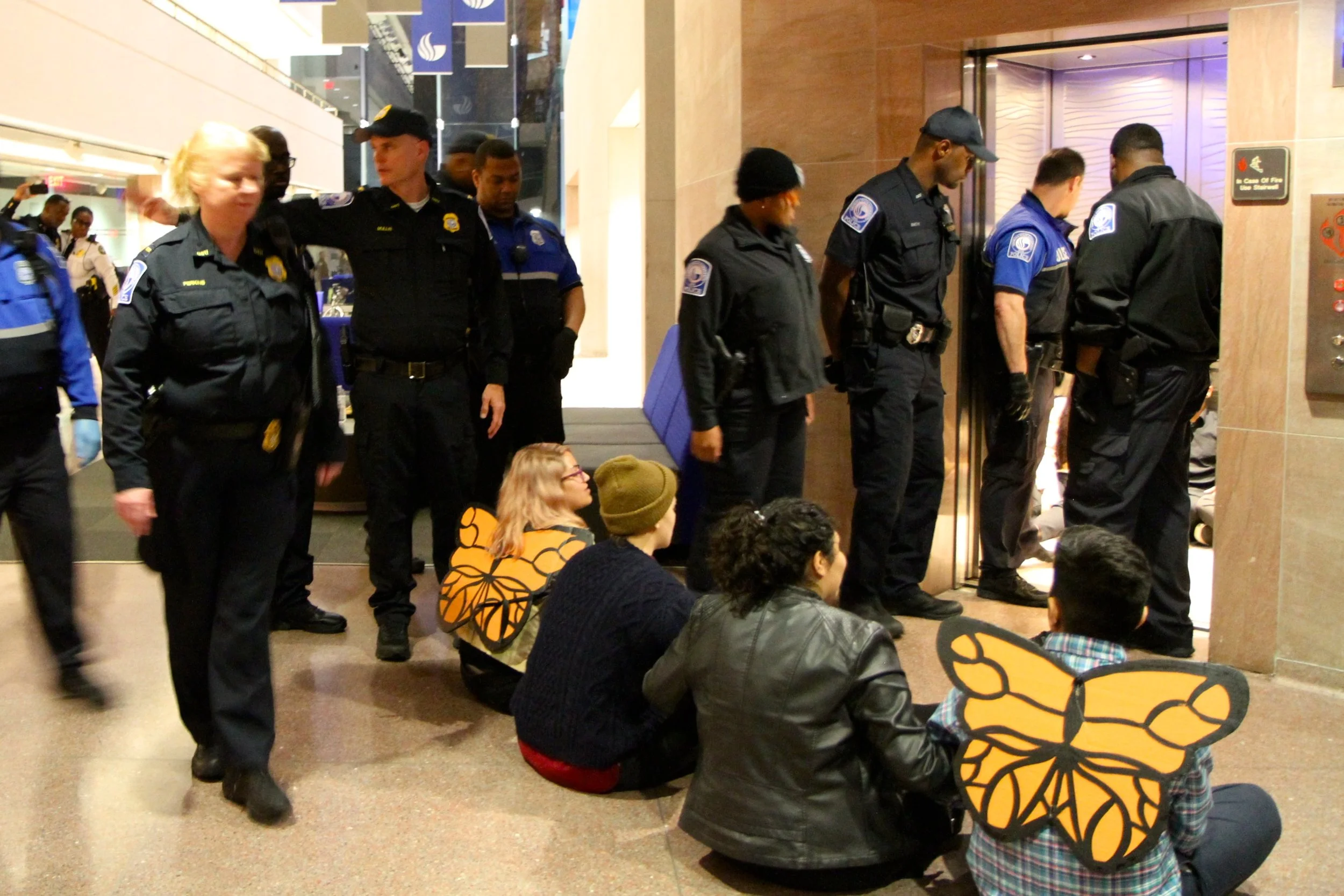
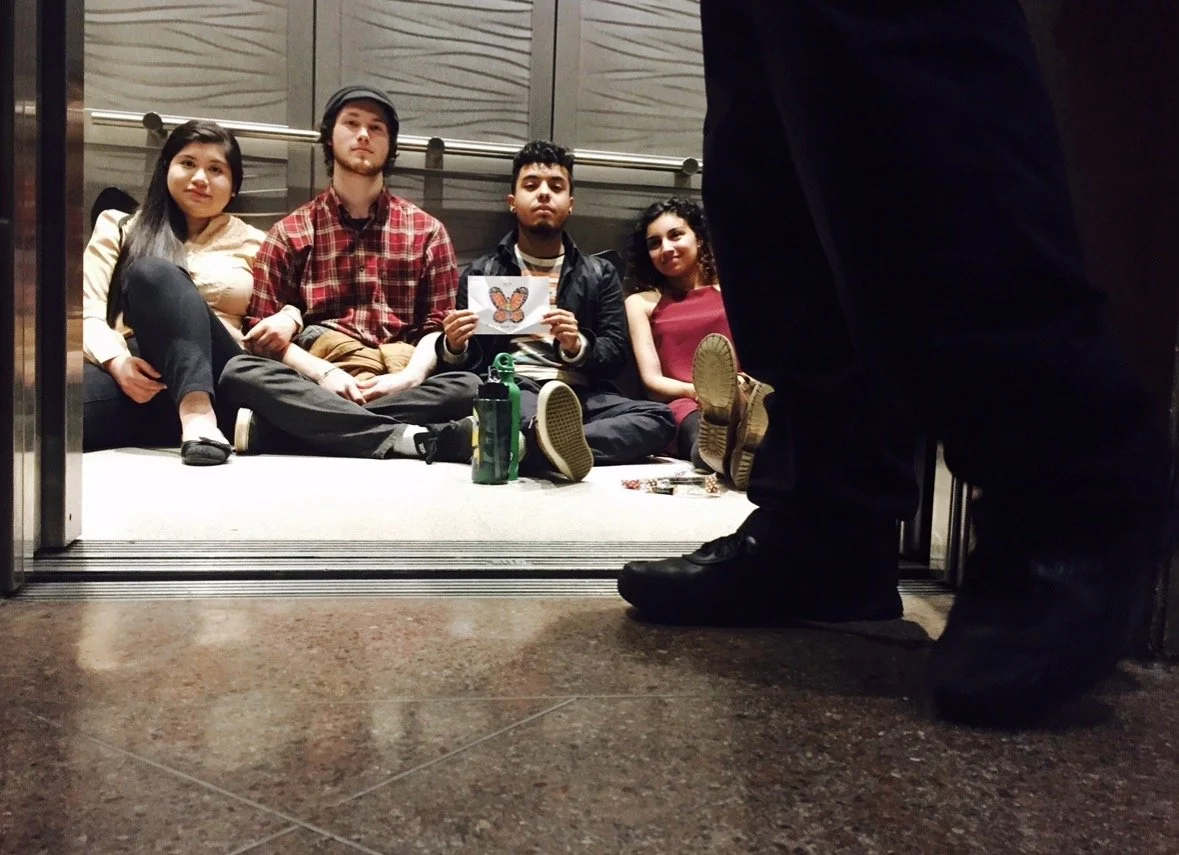
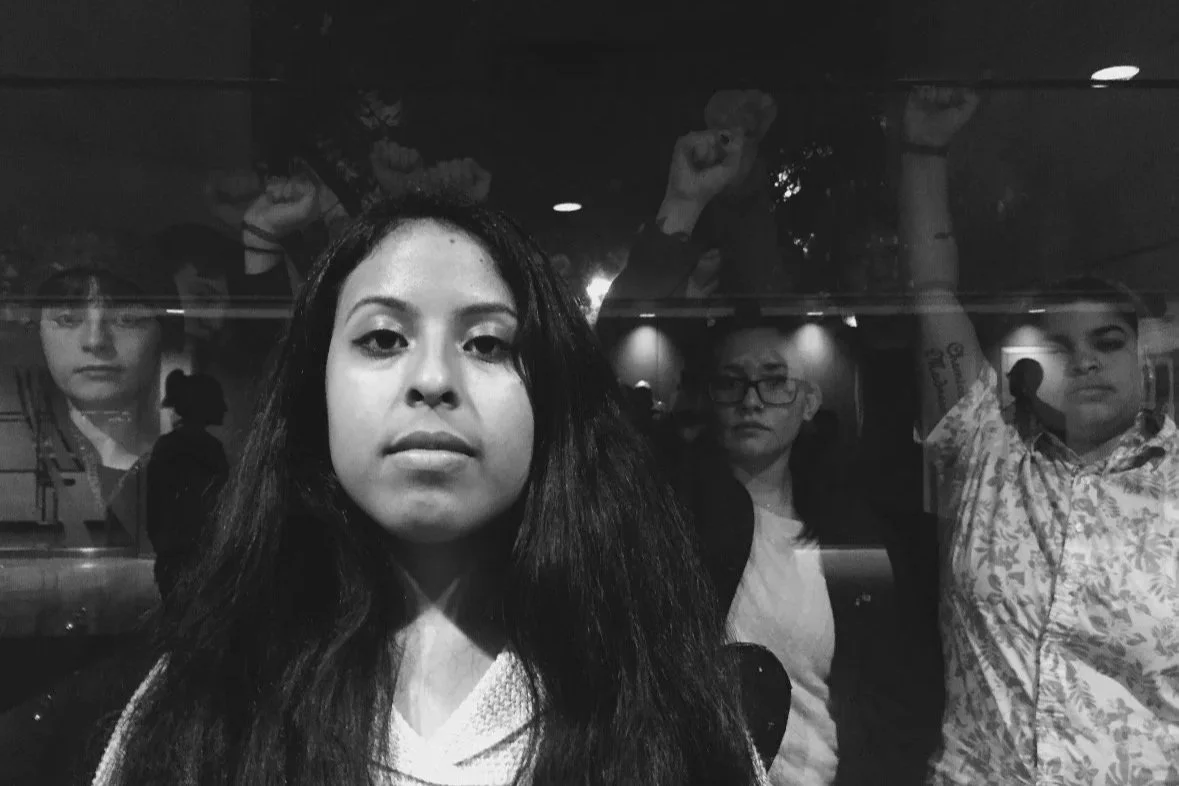
On February 1, 2016, on the anniversary of the Greensboro Lunch Counter Sit-ins on February 1, 1960, more than 90 students from 12 universities across the United States staged simultaneous sit-ins at the University of Georgia, Georgia Tech, and Georgia State University in protest of the modern segregation of undocumented students under Georgia Board of Regents Policies 4.1.6 and 4.3.4. Highlights from the event included a special musical performance by the Freedom University Singers, who were joined by the original SNCC Freedom Singers Rutha and Emory Harris, in singing “Oh Freedom” with lyrics to honor both the Black Freedom Movement and the Immigrant Rights Movement.
On the evening of February 1, 2016, more than 14 students were arrested on the three campuses, both documented and undocumented students. Their courage and activism shed a spotlight on Georgia’s segregationist policies against undocumented students. Within the year, Georgia State University was removed from Policy 4.1.6., and following the elections that November, Freedom University would go on to launch the successful Emory Sanctuary Coalition, which expanded its previous victories at Emory University to make fully undocumented students eligible for admission and financial aid.
Today, in 2026, as students across the country are recognizing their collective power and organizing to protest for the abolition of ICE, Freedom University honors the legacy of courageous students activists across generations who have fought for a better world: from the Greensboro Five to the Student Non-Violent Coordinating Committee and the Atlanta Student Movement, to the Chicano Blowouts in Los Angeles in 1968, to undocumented student leaders who risked deportation and sat-in at U.S. Senate offices to advocate for the DREAM Act and DACA from 2001 to the present.
At this very moment, Freedom University student leaders are meeting with students across the state as they plan mass student walkouts against ICE. Whether students are sitting in or walking out, Freedom University will be there. This leadership is the result of years of daily community-building across differences of race, national origin, immigration status, class, and generation, which is necessary to form the intersectional coalitions we need to confront the divide-and-conquer strategies of the ruling class - and win.
¡Que vivan los estudiantes!
…
THE ORIGINAL PRESS RELEASE FROM FEBRUARY 1, 2016
FOR IMMEDIATE RELEASE
February 1, 2016
Students Protest Georgia’s Admissions Ban on Undocumented Students:
90 Students Integrate Classes at Three Public Universities on the 56th Anniversary of the Greensboro Sit-ins
Atlanta, Georgia
On the 56th anniversary of the Greensboro lunch counter sit-ins, which took place on February 1, 1960 and ignited the youth-led movement for racial justice in the South, undocumented immigrant students and documented student allies representing 12 universities are staging classroom sit-ins at three Georgia public colleges that ban undocumented students from admission: the University of Georgia, Georgia State University, and the Georgia Institute of Technology.
Under Policy 4.1.6 and Policy 4.3.4, which were implemented by the Georgia Board of Regents in 2011, undocumented students are banned from the top five public universities in Georgia and prohibited from qualifying for in-state tuition. Georgia is one of only three states – including Alabama and South Carolina – to institute an admissions ban against undocumented students in public higher education.
In the spirit of the Greensboro sit-in, students from across the nation have gathered at the three campuses, all of which are affected by the two policies, to demand that the presidents of each school, Jere Morehead of UGA, Mark P. Becker of GSU, and George Peterson of Georgia Tech, publicly denounce the discriminatory policies affecting their institutions.
The actions are organized by Freedom University, an Atlanta-based freedom school for undocumented students in Georgia. The undocumented students are joined by student allies from seven universities in Georgia: the University of Georgia, Georgia State University, Georgia College and State University, Kennesaw State University, Emory University, Spelman College, and Morehouse College. More than 25 students represent institutions out of state, including Smith College, Bard College, Harvard University, and the College of Charleston.
The integrated classrooms are marked by hand-painted monarch butterfly wings, which undocumented students are wearing to symbolize their history of migration. The classes are taught by professors and educators from around the country, including Dr. Shannon Speed of UCLA, Ed Lee of Emory University, Dr. Richard Benson of Spelman College, Dr. JoBeth Allen of UGA, Dr. Angela Stuesse of University of South Florida, and Azadeh Shahshahani of Project South.
Melissa R., an undocumented student of Freedom University, states, “We’re taking our action to the classroom because we are determined to continue learning together despite the Board of Regents’ insistent segregation.” Her classmate Victor M. says he was inspired to participate after learning the history of the Black Freedom Movement in the South: “The Greensboro Four showed me the power of being committed to a goal beyond myself and what it means to be free.”
Tyra Beaman, a senior at Spelman College, describes, “As a student of Spelman College who has had the privilege of attending an institution created to empower black women impacted by colonialism, sexism, and racism, it is my duty to ensure that all young people -- regardless of their race, gender, or citizenship status -- also have the opportunity to access equitable higher education.”
Dr. Laura Emiko Soltis, the Executive Director of Freedom University, explains, “These students recognize that higher education is a human right that should be equally accessible to all on the basis of academic merit, not social status. They recognize that educational segregation simply has no place in the 21st century. In this brave and historic action, they are carrying on the great tradition of young freedom fighters in the South and risking everything to show us their vision of a better world.”